Ninety Minutes Later: The Hidden Time Tax in 2026’s ‘Quick’ Multiplayer Nights
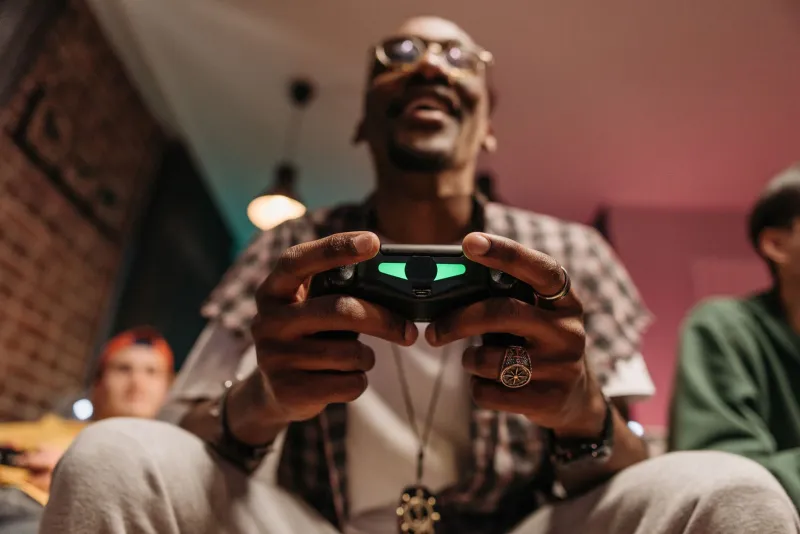
You sit down at 8:15 p.m. for a couple of rounds. You stand up at 9:50. Nothing about that is accidental. In 2026, the biggest multiplayer games have gotten very good at turning a quick play session into a shift. Not through anything as crude as a mandatory minimum, but through a stack of small design choices that each add a minute or two — and together eat an evening.
This is not a moral panic about games. It is a stopwatch problem. If you are going to spend your limited free time on live-service titles, you should know what the meter is actually running. Over the past two weeks I tracked five sessions across a hero shooter, a battle royale, a tactical FPS, a sports title, and a racing game. The labels do not matter as much as the pattern: the session you plan and the session you play are rarely the same length.
The Stopwatch Test
I kept it simple. Start timer when the game launches. Stop when I close the app. In between, I noted every prompt that asked me to stay: rematch buttons, ‘next match starts in’ countdowns, post-match XP screens, battle pass progress bars, and any screen where the back button was smaller than the continue button.
The result was ugly in a useful way. A planned ‘three matches’ in the hero shooter took 46 minutes. The matches themselves were about 31 minutes. The rest was queue, hero select, end-of-match stats, and two rematch prompts. A ‘quick’ battle royale session — one win or two losses, I told myself — ran 68 minutes. The actual play time was 39 minutes. The tactical FPS was the cleanest of the bunch and still stretched a 40-minute plan into 58 minutes. The sports title was the worst offender: a single exhibition game plus menus and a post-match reward screen hit 34 minutes for 18 minutes of play.
None of these games lied. They just made the exit expensive.
Where the Minutes Go
The first place to look is the end-of-match screen. In 2026, it is rarely just a scoreboard. It is a progress report, a storefront, a reminder that your battle pass ends soon, and a countdown to the next match. The countdown is the key. A timer creates a default action. If you do nothing, you stay. You have to actively choose to leave. That is a small friction, but small frictions compound.
The second place is the rematch prompt. It usually appears while you are still processing the last match. You lost, you are annoyed, and the button says ‘Run It Back’ instead of ‘Quit.’ Or you won, you feel good, and the button says ‘Stay in the Flow.’ The wording is not neutral. It is a nudge with a controller in its hand. Sometimes the prompt is timed. Sometimes it is the only highlighted option. Sometimes the back button is a long press. None of these are accidents.
Playlist Design That Punishes the Exit
The third place is playlist structure. Many 2026 games rotate modes in a way that makes leaving feel like missing out. You finish a match and see that the next mode in the rotation is the one you actually wanted. Or the game gives you a daily challenge that requires two more matches in a playlist you were about to leave. Or the post-match screen shows a progress bar that is 80 percent full and a reward that expires in 20 minutes.
This is not a conspiracy. It is retention design. But retention design has a time cost, and that cost is paid by the player. If a game is good, you do not need a countdown to keep playing. If a game needs a countdown, that is worth noticing.
The Post-Match XP Timer
One of the more subtle changes in 2026 is the post-match XP timer. You finish a match, and the game shows you a progress bar filling up in real time. It takes 10 to 20 seconds. During that time, you cannot queue for the next match, and you cannot leave without losing the visual reward. So you wait. Then the game says ‘XP earned’ and gives you another button. That is 15 seconds per match. Over six matches, that is a minute and a half. Over a season, it is hours.
The timer is not the problem by itself. The problem is that it turns a moment of decision into a moment of waiting. You are not choosing to stay. You are just not choosing to leave. There is a difference, and the difference is where your evening goes.
How to Audit Your Own Matchmaking Diet
You do not need a spreadsheet, but a notes app helps. For one week, log the following for each session:
- Planned length (e.g., ‘two matches’ or ‘30 minutes’)
- Actual start and end time
- Number of rematch prompts you saw
- Number of post-match XP timers longer than 10 seconds
- Whether you left via the back button or by closing the app
- How you felt at the end (fine, tired, annoyed, wired)
After a week, look for patterns. You will probably find that the games you enjoy most are not the ones that keep you longest. You will also find that the ‘one more game’ impulse is strongest when the game gives you a reason to stay that is not the game itself — a progress bar, a timed reward, a rotating playlist.
Then set a rule. It can be as simple as: when the post-match screen appears, I decide whether to stay before the countdown ends. Or: I leave after the match I planned, even if the next mode is the one I want. The rule is not about discipline. It is about making the exit as easy as the entry.
The Holiday Break Test
The holiday break is coming. For a lot of us, that means more free time and more temptation to let a ‘quick’ session turn into a 90-minute shift. The games know this. They will run events, double XP weekends, and limited-time modes designed to keep you in the lobby. None of that is evil. But it is worth going in with your eyes open.
The best way to enjoy a live-service game is to know what it is asking of you. If you are fine with a 90-minute session, great. If you wanted 30 minutes and got 90, that is not a you problem. That is a design choice. And once you see it, you can decide whether to keep paying the time tax or take your evening back.
Maybe one more game is fine. Just make sure it is actually one.